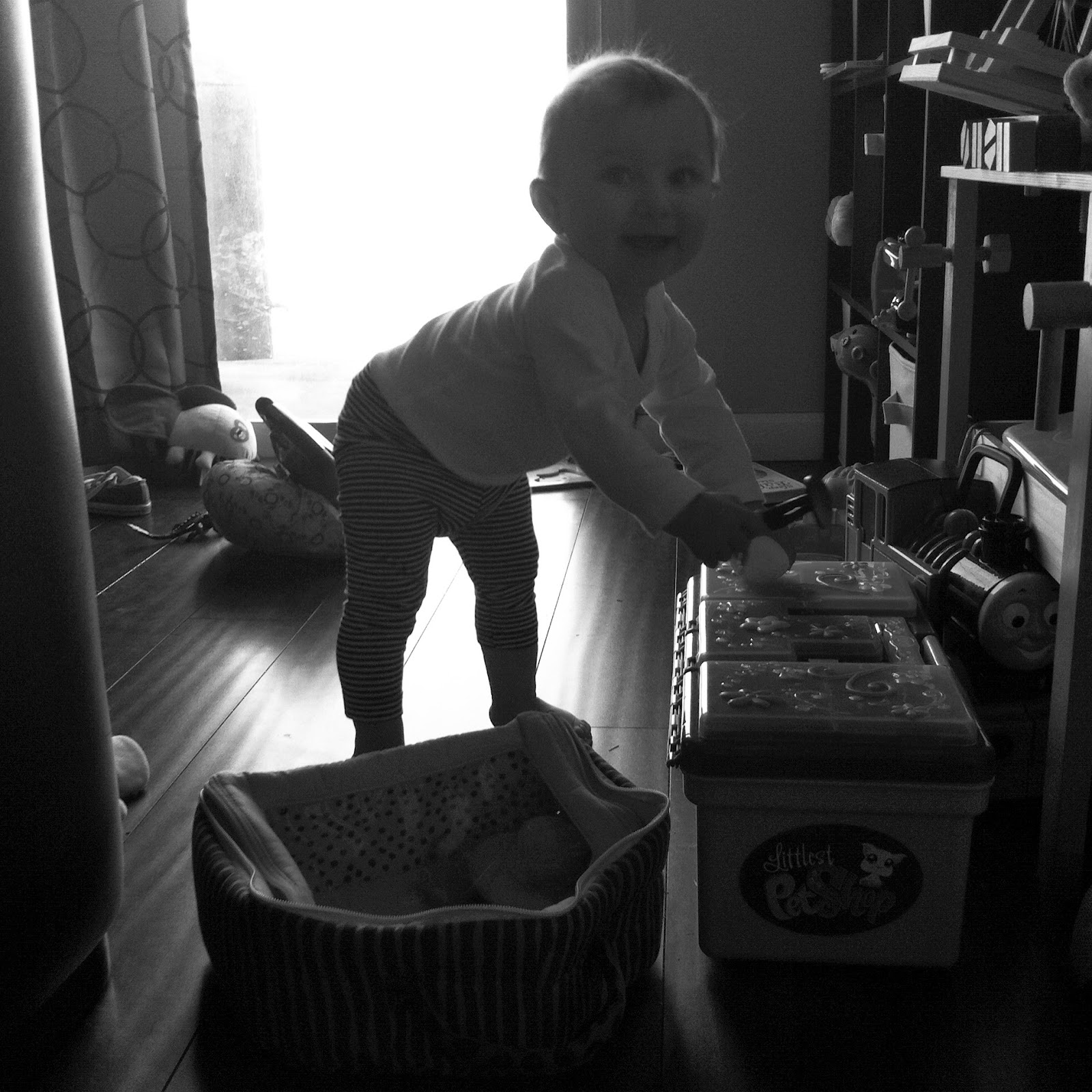
April 4: Dorothy Parker

4.04.2014

Dorothy Parker Fridays
 
I wear worry lines most days.
They trace the edges of my eyes
like war paint. 

On days when motherhood will not be enough,
I think of dark, short hair with waves
as unpredictable as mountain roads.

Twin backseat screams make short rides long,
force me back to long-lost days of boys and shows,
driving the wrong way down a one-way Pensacola street.

The ever-seventeen year old in me
cannot behave. She needs
a Dorothy Parker Friday
sometimes.

I dress my eyes in dark,
put the color of blood on my lips.

I vamp a little.

I polish up the skin of a self
pushed aside by another.

April 3: Amy Riddell

4.03.2014

Like a Butterfly
for Amy Riddell

With a mouthful of bean dip,
I told you across the table covered
in my sprawling prose pretending to be poetry,

“How do you do it? You’re like a boxer.
You keep your eyes open, your arms in—
always a jab waiting in the wings.

I don’t do that.
I flail.”

My poems are tired toddlers
or drunken protestors in the rain
with blistered feet and signs too wet to be read
so they just start swearing.

You see where to hit
and how hard.

You study soft spots on repeat,
recall how fast the other falls.

You know divots in the record,
hearing skips before they happen.

You’re in the ring until the ding,
the last one standing.

I want those wings
that make you
light enough

to float.

----------

Read selections from Amy Riddell's Bullets in the Jewelry Box here. Then buy it. Lord have mercy, the things this poet does with words.


April 2: William Carlos Williams

4.02.2014

The Good Doctor
for William Carlos Williams

“You now officially have more information about me
than any other person on the planet,” I said,
handing over five small-print pages
where I checked family history
boxes beside disorders and cancers,
X-ing them hard,
layering death-black ink like superstitions
while tallying loves and losses,
counting on confessions to keep me safe.

In the waiting room, my mind wanders
as I wonder whether a sinning priest
can confess to himself.
Here, I think of you, William Carlos Williams,
the good doctor,
a wound in one hand,
a salve in the other,
never waiting in this room
to hear the sound of your own name.

You, the diagnostician,
must have known always what you had,
but in this waiting room
a woman who cannot heal herself
cries.

I finger-trace cures into idle hands,
stand by for white-coat wonders.

I want to write her well like you,
to save all the plums for her,
push her in red wheelbarrows home
where she can dance naked in front of a mirror,
afraid only of waking the baby,
her sweet Kathleen.

I am no cure.


I can only put her in a poem.

April 1: Walt Whitman

4.01.2014

To mark National Poetry Month, I will be penning and posting a poem a day to celebrate a poet I love. I admire regimens. I also admire forgiveness when I fail at them. Let's be a team and give both a try!

One of my deepest high school crushes was Walt Whitman. He was my introduction to the kind of poetry that could take the top of my head off (borrowing here from Plath's all-to-precise phrasing). Leaves of Grass changed the way I think about writing and life. It unshackled me. 

And so we begin with him, one of my very first loves.

Napping Lazarus
For Walt Whitman

Like a boy putting lemon juice between the lines,
you invisible inked me love letters
while I waited in the sleeping nothing
to be born.

You worked on me with whispers—
wake up, wake up, wake up—
turning into yawps,
pulling me out from beneath years of covers
onto Boston rooftops.

“All the good ones are dead!” I said,
wishing I’d been born Jesus,
you, my napping Lazarus.

Agrarian burial clothes might house
your hollow body,
empty even of that Massachusetts air.

I’d bring you back without question.
“Arise, Walt Whitman!
Come out!”

__________

Read Walt Whitman's work at Poets.org. 


How I Balance Books and Babies

3.16.2014


While I pored over the second galley proof of the literary magazine I edit with one of my nearest and dearest colleague-friends and a too-strong cup of caramel coffee, I received the following text from my husband: “Evangeline just took her first step!” He and our three kids had been at Grammy’s house for the afternoon while I slipped away during naptime to take care of some emergency editing (there is actually such a thing, and it, as you might guess, falls squarely and surely under the heading of “first world problems”).
I’d just gotten settled into an empty house by clearing the dining room table, adorned with half a bouquet of flowers I’d stolen from my mother-in-law after she’d performed a flirty flapper’s rendition of “Button Up Your Overcoat” at a continuing education showcase program and asked me to put them in water for a while since I’d be going straight home.
I’d even prepared my apology in advance for the rest of the house. It’s briefer than ever these days: “You’ll have to forgive the house with the exception of this dining room table. I’m not gifted in housekeeping.” I sometimes work in the word “knack.” I find it charming and use it in hopes that it distracts from the dust. The idea that people dust and vacuum weekly really is so foreign to me. I applaud those of you who do it, and I’ll work the word aplomb into my language massage if it makes you forgive me for the dirt and dog-hair tumbleweeds lining the hallway in the meantime.
E apologizes sometimes. This is her right after she ripped a page from one of my books. Is it just me, or do her eyebrows slightly raise as if to say, “You know I’m only eight months old, right? You didn’t think I was just going to turn the page like an Oxford grad, did you?” She has a gift for the “shame on you” look. If she chooses motherhood someday, she’ll be brilliant at it. I could learn so much from this little (n.).


And this little, this eight-month, nearly nine-month wonder, walks as if it’s a brief wish in a line of longer, loftier ones. My son was dragging his legs military-crawl-style with two eager and determined elbows for months before pulling up. This is him.*


            He didn’t walk until he was fourteen months old, so the text was not only telling me our daughter had walked her first steps but also that she was some kind of superhero. The papers should have been notified that moment, actually. I’m not sure what I’m doing just putting it on a blog. This is actual news. Someone with a camera not in their phone should have been on call to photograph it.
            My colleague’s response, when I read the text, was one of regret, like “Oh, you missed it!”
I shrugged it off, “Oh, she’s the third. And she’ll never know.” We both agreed the story should go that I was there, and it was amazing. No one needed to know anything but that.
But the more the missed first step settles in, the more my heart goes in two directions. Half of me says that she should get ready for me to miss many more things. It’s just not possible for me to be two places at once, and I’m needed so many places at once sometimes. The other half of me remembers winning a spelling bee, among many events, my dad could not attend because of work, and knew that because it even came to mind, it mattered much more than I wanted it to.
My son calls me out on it often. He is nearly three, and he is incredibly bright. That fourteen-month-walking jig was up really quick when we realized that was his giving us a head start because he hasn’t stopped since. His brain doesn’t stop. Like my oldest, he is intuitively wise. He knows that the front yard is no place for a laptop when the weather is good, and we’ve got a bucket of sidewalk chalk calling our names.  


I thought I was killing it as Mom last week. Papers had to be graded; kids had to be raised. One beach chair on the front walk later, and boom—WorkingMamaPalooza. Lies. All lies. He walks up, presses a few keys, closes the laptop, and says, “No laptop, Mommy. You done.” Smart kid.
I have enough Working Mother’s Guilt for all of us, and I’m done being distracted with questions of semantics, like why there isn’t anything like Working Father’s Guilt, or speculating about the answers some churchly friends would say in response to my bringing up Working Father’s Guilt—questions I get all the time anyway, like “Are you still working?” and “Are you a liberal?”
            Guilty or not, I’ll say I feel being caught in the gap between books and babies some days. I am fully present and all in with whatever’s in front of me, but some days, it’s a revolving door.  In the past three weeks, we’ve had five sinus infections, an allergic reaction to medication, four trips to the pediatrician, three trips to the pharmacy, two days of missed work, a couple hundred dollars bet on recouping, and a thousand loads of laundry. Seriously, it probably would have been easier to just move or buy new children. But, we’re very nearly well, so things are looking up. This was E before she broke out in hives. The calm before the storm really only means a storm is coming. It’s nothing to relax or take a cocky selfie about. Yet, here we are.

          
            Sickness is a monkey wrench thrown into the Swiss clock of our household constitution. We cannot be sick. The whole thing goes to hell.
            I’ve been consumed lately with the notion of “breathing room,” or “adding margin to my life,” but the trouble is I’ve been living with time credit cards, and the debt piles up until we get sick, and it’s a feeling very similar to playing Level 10 in Tetris on no sleep while someone is kicking you in the face. I’ve been so consumed with these notions that my study of breathing room, margin, and recreational reading have begun eating into that margin that would have been there, so I’m maxed out again.
            When someone shakes a pity noggin or points a finger of shame in my direction, I want to tell them that it could be worse. I could be doing drugs. But honestly, I’d never waste money or time on drugs while hummus and Downton Abbey still exist, and they’d call my bluff. Everyone knows what I’m about: Jonathan and Jesus. Anything else is window dressing.
Still, how do I do it? I’ve never known how to explain it before, that sense that I’m busy but managing just fine, that I’m tired but not broken, that I’ll keep doing what I’m doing because I’m called to be here and there, that heavy hope that this is okay and we are fine, but the words came today, as they always do.
I focus on the honey, not the hive.


*(It should be he, not him, because it’s a subject complement, but honestly, who’s doing that these days. If I would have put in he, half of you would have thought I were wrong and roughly the other half would have thought I were pompous. It would be only that sweet spot of 1% that championed me and my whole grammar fight, and with my slack-jawed and mostly intentional word mangling [I call them letter butterflies sometimes], I doubt you all read these things. Thanks to those who hang in there despite me.)

Education and the Cost of Being Weird

2.24.2014

             So the word on the street is that the Prices are a little weird. Perhaps folks have always thought that about us—certainly, they’ve always thought it about me, and they should; I am a little weird. But when they started saying it about my family, I wasn’t quite sure how to feel.
            I field a lot of questions from people about how I get my daughter to read as much as she does. She can inhale novels like my mother can inhale a box of hot Krispy Kreme donuts; both occur as if by magic, my Daina nearly wiping sloughed words like dry glaze from her lips when each jacketed cover closes.

            I answer the questions that come although I’m not sure I should be credited as the reason. She was born reading the same way that my elementary school friend Octavia was born to run. I would invariably get a side cramp ten yards in, so sure I must be dying; meanwhile, she ran with a gait as wide as her height, nearly flying through the air and would lap everyone again just because she enjoyed the wind on her arms. This is Daina.
Once she got over the phonics hump of letter blends in kindergarten, she began lapping all of us, finishing her “required thirty minutes of reading” for all five days of the week by bedtime on Monday—and why they do this mandatory scheduled reading still baffles me. This is not how you teach someone to love. This is not how you get them to negotiate with the librarian to let them take “just one more” home. You’ll never catch them smuggling flashlights in their pillowcases by treating books this way. I digress, as I tend to do on this subject.
I answer the questions about her reading because I know how much joy, empathy, and character she gets from books, and if there is something to teach to this regard, I want them to have it. I want them desperately to have it like she has it.
But the conversation doesn’t always go well. You see, we have a mild book-hoarding situation in our house. Her closet is filled with paper-ream boxes packed with hand-me-down books for Atticus and Evangeline who will grow up in her good-enough library. Her rooms have utility shelves that are lined and piled with paperbacks, adorned with towering stacks of treasured hardcovers and box sets. She never leaves the house without at least three books, a book light, and a set of backup batteries, which she says are “in case of an emergency.” She reads in the car, under restaurant tables, in waiting rooms, and anytime her mind and her hands aren’t occupied otherwise.


Yet even from those who shove their children into books hoping that they fall in love despite the arranged marriage, I’ve been told “That’s not normal” when it comes to my daughter’s reading habits as though she’s gone off some deep end, expressing more concern for her being lost in Emma than the others who text their brains out from the earbud-wearing people they sit across from because, and I quote, “It’s just easier.”
Yes, we are the sort of family who runs out for books like others go for milk and bread. We’re also the sort of family who volleys jokes to one another in ordinary situations as though in lit culture code. Sometimes my jokes are just for me, and that’s okay. I’ve said “War Eagle,” “Roll Tide,” “Go Noles,” and “Go Gators” to end plenty of awkward football conversations I couldn’t follow. It may be okay if I, too, talk freely about the games I care about.
Some of these fans tear their clothes off and paint their bodies. I have never done either at the public library.* And you’re welcome for that.
I show my enthusiasm in other ways, ways like Daina does, noting book releases as though they were big game days and being loyal to a favorite writer and believing they’ll pull through this slump because you saw what they did last season and you know what they’re made of.
But someone recently called Jonathan and me the “educated ones,” and I’m not sure it was meant to be a compliment at the time. I might have even heard it as “freaks,” or worse than that, “you freaks.”
I understand more than I want to the cost and distance that accompany the decision to pursue higher education and lots of it. Degrees come prepackaged with assumptions other people will make about you because they believe those degrees come with assumptions you will make about them.
I know stories and have some of my own about family who encouraged college until they realized what it cost. And this cost has nothing to do with money. What the family wanted was the paper on the wall. They didn’t want the discomfort of awareness and the burden that comes with it, the responsibility to act on what you now know, to say uncomfortable things at the dinner table. It’s when they say “educated” but mean “uppity” and substitute generic “college boy” in place of your name that you know you can’t go back. College isn’t the only place this happens, but it’s the closest comparison I have to convey the cost of being bookish, the cost of being weird.
A short while after I finished my doctorate and noticed that some people started treating me differently, and not in good ways, I had dreams where I would try to give it back. At the risk of sounding like a complete Princeton princess**, I’ll admit the moment is most aptly compared to Eddie Murphy’s scene in Coming to America when he says to the girl who does not want to marry a rich prince, “I renounce my throne!” because he wants to be with her more than he wants to be king. And it’s just not that simple. It’s nothing you should wish away, and it’s nothing you can wish away.
The trouble is that we cannot unknow a thing, and a degree is supposed to be an outward sign that you know some things. But once we hear those things and they stick, they are ours. The whole thing has to fade and wear off, fleck by fleck, like a cheap and temporary tattoo, and some just won’t wear.
So, too, is the love of books. This love becomes an imprint, an identity. It’s the mark of the weird. And books didn’t make us this way. We were weird before they got here.
And maybe that identity is the cost of it all, the necessary othering from those who don’t buy into the hype that books make you better.
And they don’t make you better than anyone, but they do make you feel better—I know they make us Prices feel better—especially when it comes to being weird.


*I would tailgate at a library if invited. Friends, make a note.

**I did not go to Princeton. I just liked the alliteration. I went to FSU. Go Noles.
Proudly designed by Mlekoshi playground